Context
Traditional Korean artistic calligraphy is commonly called Seoye (서예). It includes work with Hangeul as well as a long history of calligraphy using Hanja, and it belongs to a broader East Asian brush culture while developing distinctly Korean forms.
Tools and movement
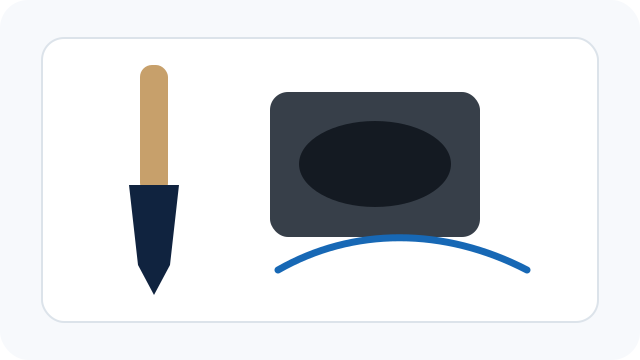
Korea.net describes the traditional “four friends of the study” as brush, ink, inkstone and Hanji. Its account of learning Seoye emphasises stroke order, pressure control, spatial balance and differences in brush intensity rather than a fixed metal-nib width.
Hangeul changes the structure
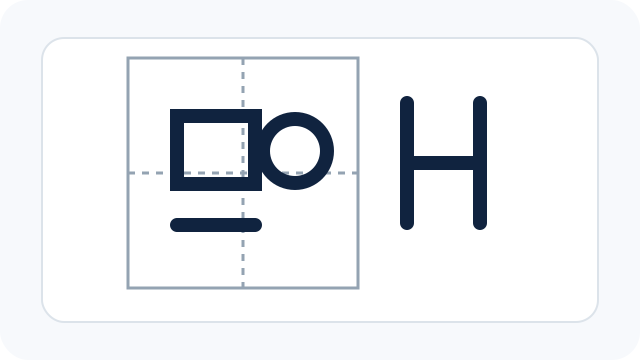
Hangeul letters combine into syllable blocks, so spacing and internal balance are especially visible. Hanja practice shares structural concerns with Chinese-character calligraphy, while Hangeul gives Seoye a specifically Korean dimension.
Practice guides in CalligraphyToolkit
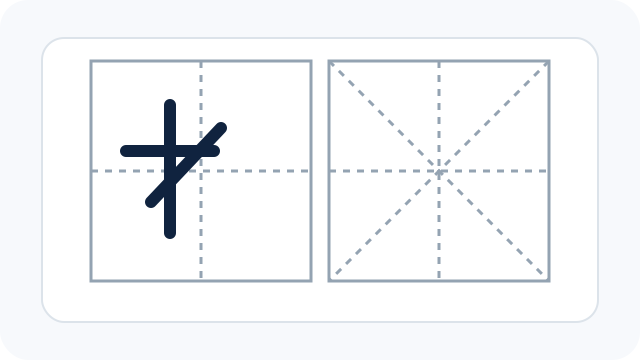
The Seoye mode offers square, cross, nine-palace and vertical-column guides. They are generic structural aids suitable for comparing proportions; they are not presented as a single traditional Korean standard. Work from a trustworthy Hangeul or Hanja exemplar.
Sources and further reading
- Korea.net — Seeing Hangeul’s beauty via learning traditional calligraphy
- Korea.net — Munbangsawoo, artículos indispensables en la caligrafía coreana
These notes are based on the sources below. For deeper study, check the original source and a good reference alphabet or teacher.